
Aren’t You Embarrassed?
Bad behavior used to be shameful. Now it’s trending.

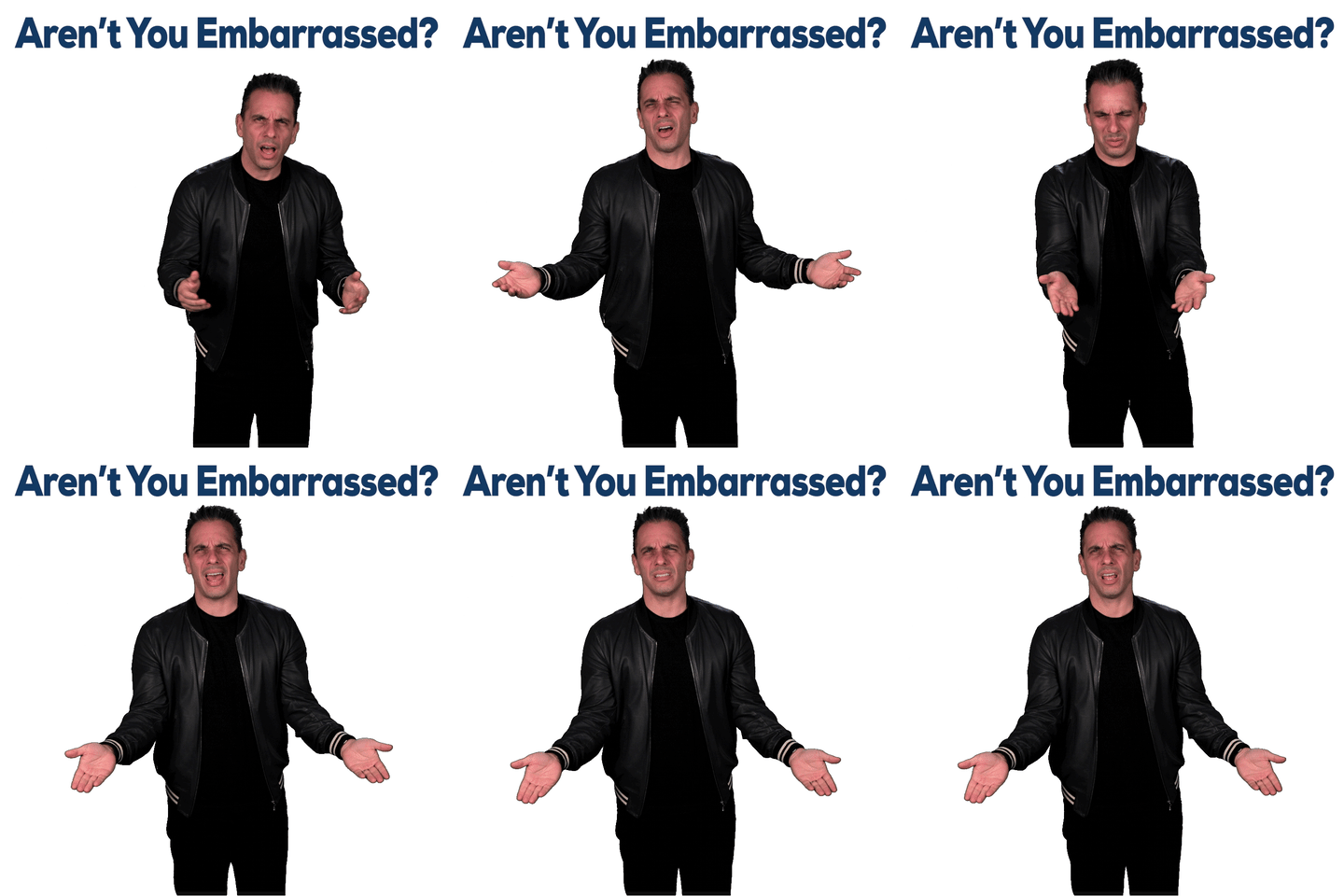
Image: Screenshot Sebastian Maniscalco, “Aren’t You Embarrassed?”
I watched an old Sebastian Maniscalco skit the other day where he asked, “Aren’t you embarrassed?” It was funny when I first saw it, but now it hits a little too close to home. That feels like a question we all should be asking ourselves.
Anymore, it’s not uncommon to hear profanities yelled around every corner or see people throwing beers at sporting events or parents arguing at a little league baseball game. Just spend five minutes on social media or at a public event of any kind, and I will be proven right. We used to pretend at least to have manners; now it seems the more vulgar you are, the more applause you get. Aren’t we embarrassed? Or have we just decided there’s nothing left to be embarrassed about?
The Algorithm Loves a Meltdown
I mentioned in a previous Substack post the unfortunate assassination of Charlie Kirk and what I called an “Algorithm of Outrage” that has overtaken our society. The worse your behavior, the larger your audience. Americans love that stuff! We’ve all seen the “Karen” videos, road-rage incidents, or grown men stealing a home run ball from a kid. The examples are endless. These clips find the algorithm, or maybe the algorithm finds them, and then suddenly you have a viral video.
Remember when news came only once a day, and we had to wait until the next morning to find out what had happened the day before? Maybe you’re too young, but that delay gave us time to process, reflect, and act with a sense of decorum. Now, news hits us instantly, we react, and it spreads like a virus. Our reaction then becomes a commodity exploited by those in power, who pour millions into the pockets of those who make the rules. Evil geniuses. Even as I type these words, I feel angry at this fucked up system we’ve created.
Our Personalized Outrage Feeds
I think each of us has an algorithm, as unique as our fingerprint, that displays exactly what it thinks we want to see. Good, bad, or just a vacation to the beach. It’s creepy how many times I’ve had discussions about something or searched for it online, only to start seeing ads for that very thing in my feeds shortly after. You’ve noticed it too, admit it. It’s weird.
My personal algorithm mostly shows dogs, hotel or flight information for an upcoming vacation, sarcastic memes, and occasional side boob. Still, I also come across street fights, loud arguments at restaurants, or people melting down in public. When that happens, I remind myself that these things occur because I’ve stayed too long. I engaged. Most of us are guilty of watching train wrecks, including me, and social media and news outlets are aware of this. We’ve built a digital system that rewards our worst behaviors. So, is our bad behavior by design? Do the powers that be really want to see us acting like fools and at each other’s throats? Yes, they do, and it seems like they’re winning.
The Ugly American Has Come Home
Once upon a time, the “Ugly American” was a tourist. The guy in cargo shorts yelling “Do you speak English?” at a waiter in Rome or demanding a better hotel room in Paris. Now, he’s closer to home. He could be sitting next to you right now, on your flight, in the next lane at Target, or losing his mind because the drive-through forgot his fries. The loud, entitled tourist still exists. He’s probably your neighbor. You don’t need a passport to see the Ugly American anymore, just look out your front door. We are assholes!
How did we arrive here? As I mentioned earlier, social media tends to favor the loudest voices over the wisest. Still, our politics have corrupted the environment just as much. Harsh, confrontational language isn’t just accepted anymore, it’s praised. We see leaders act like schoolyard bullies, and the crowd cheers. When disrespect becomes the norm, any sense of embarrassment is lost.
Freedom of Speech vs. Freedom from Decency
Let’s be honest, free speech is sacred. The First Amendment protects our right to speak, but somewhere along the way, we started mistaking that for a license to say whatever awful thing comes to mind. Does the First Amendment exempt us from basic decency? In the past, shame or embarrassment helped draw that line. You didn’t curse strangers in public or scream into your phone in a crowded restaurant because it was embarrassing. There was an unspoken understanding that said, “Hey, other people exist. Shut the hell up!”
That understanding has disappeared. Instead of feeling embarrassed, people doubled down. They post the video, defend their actions, and blame “cancel culture” for anyone criticizing them. We’ve gone from “don’t make a scene” to “watch my scene go viral.” Embarrassment used to act as a guardrail, but now it’s gone.
The Cost of Losing Embarrassment
Public spaces can feel more hostile. At any moment, a word or a look from a stranger could spark a confrontation. Public venues are chaotic, schools are becoming more lawless, and everyday interactions are growing more aggressive. This isn’t to say that simply becoming more aware of shame or embarrassment will fix everything, but when we stop feeling these things, we care less about how our actions affect others. It weakens our collective pride in who we are and how we treat each other.
Also
Kids are watching. They learn that hostility and vulgarity are just the norms. When they see adults throwing tantrums at airports or politicians trading insults, they often take that as normal. The saddest part is the resignation—the shrug that says, “That’s just how it is now.” But that attitude is the quiet death of standards. Once we stop expecting better, we guarantee worse.
A Call for Reflection
This isn’t a call for censorship or moral purity. It’s a call for awareness. Maybe the next time we scroll past a viral confrontation, celebrity meltdown, or any other online ugliness, we should ask ourselves: Why does this entertain me?
We can’t legislate manners or force empathy into our feeds. But we can decide what we promote. We can choose to display something better. We can be the peaceful voice in the checkout line, hold a door for someone, or say “sorry” and actually mean it. And for God’s sake, don’t post ugliness and don’t retweet, restack, or spread this bullshit.
Embarrassment Isn’t a Weakness
Embarrassment is needed today. It’s that small voice that says, don’t be an idiot right now. Real strength isn’t in blurting out whatever crosses your mind, it’s in holding back, showing some manners, and realizing you’re not the only person in the room.
I don’t think it’s too late. I still see glimpses of decency in people helping strangers, returning lost wallets, or quietly doing the right thing without a camera around.
That’s the America I want to believe in and the America I want to live in.
Maybe the first step back is to ask the question out loud: Aren’t you embarrassed?
And if the answer is “no,” then maybe that’s the problem.
E. Olson
If this hit a nerve (or made you laugh a little) I’d love to have you stick around. Subscribe and join the conversation about how we can do better, one small act of decency at a time.
Love this Eric! You need to write a book! You are the best!